The framework

Understand the Traps to Laps model

Traps to Laps is a community-based shelter diversion model. It is built around a simple idea: many kittens who end up in shelters could remain safely in the community if the people who found them had support.

Rather than treating intake as the default next step, the model creates a coordinated pathway between community members, supported fosters, Field Techs, veterinary resources, TNR programs, and adoption partners.

FindSupportCareSocializePrepareTransferAdopt
Stage by stage

The seven stages of the pathway

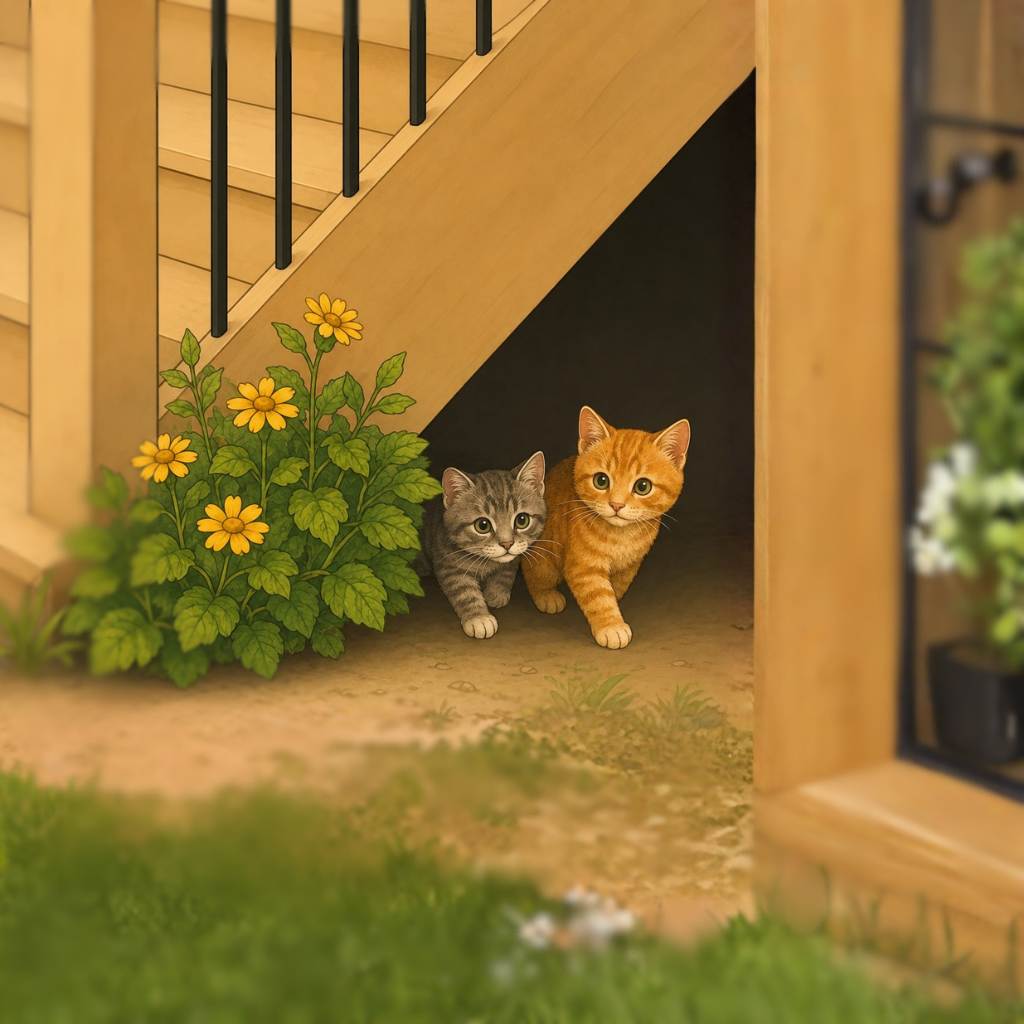
Illustration of an orange tabby kitten and a gray tabby kitten peeking out from under a porch step

Stage 01 · Find

Kittens are identified in the community

Community kittens are identified before shelter intake becomes the only available option — often by a resident, a caretaker feeding outdoors, or a trapper working in the area.

Finding them early is what makes every later stage possible.

Assessment covers the environment as well as the litter: owned pets in the household who may need help, unaltered community cats nearby, and whether a trapper can be connected to the location so TNR (trap-neuter-return) addresses the larger population. The goal is to solve the immediate situation and reduce the chance of a next litter.
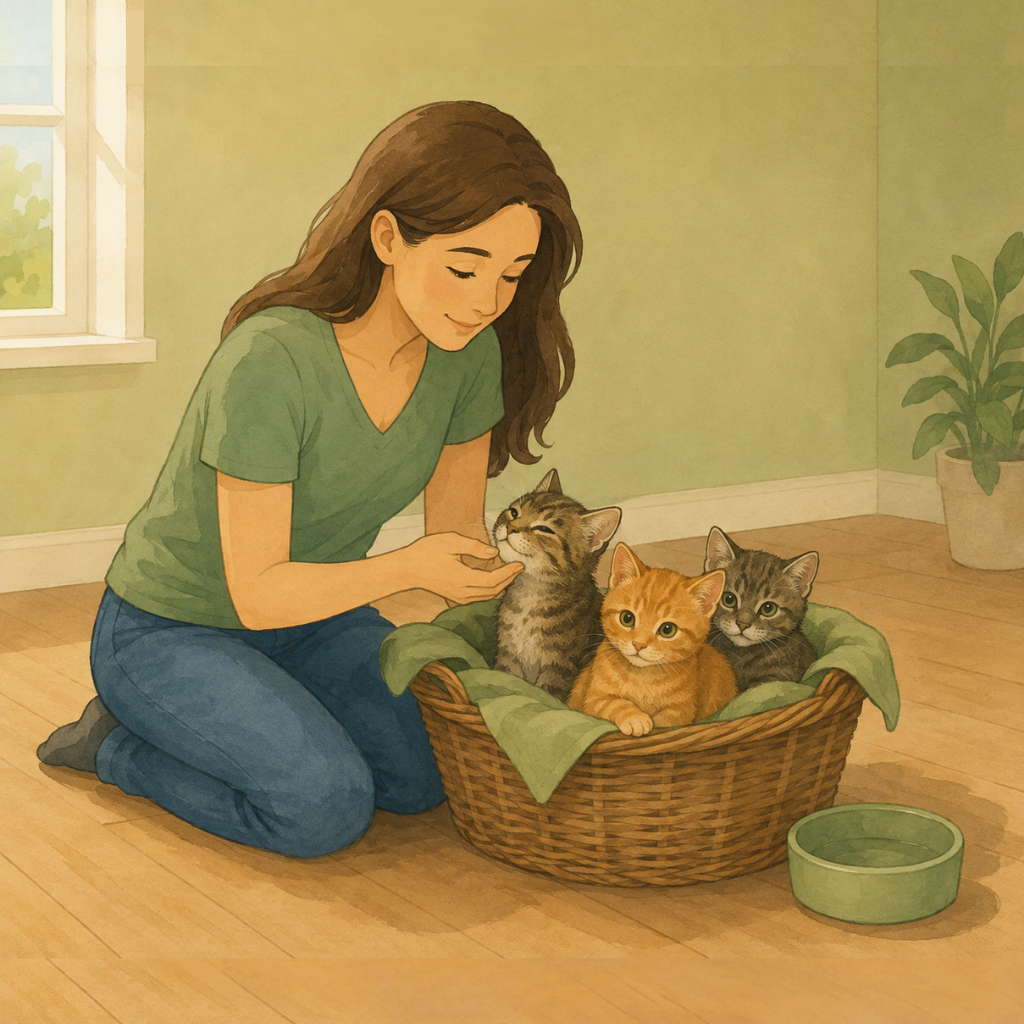
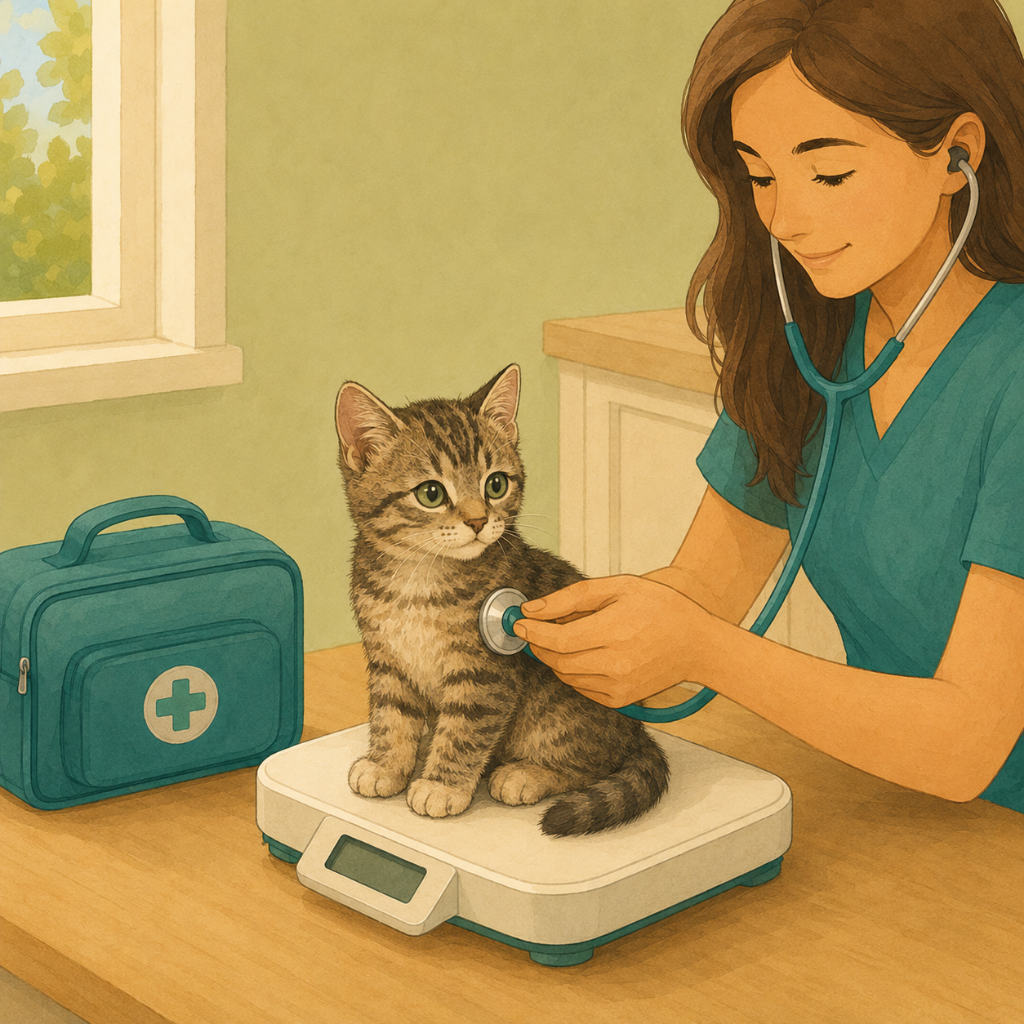
Illustration of a person's hands gently settling a tuxedo kitten into a blanket-lined basket

Stage 02 · Support

The person who found them becomes a supported foster

When appropriate, the person already caring for the kittens becomes a supported foster instead of a surrenderer.

A finder may not know how old the kittens are, what medical care they need, how to socialize them, when they should be vaccinated, or how to arrange spay/neuter. That does not necessarily mean they are unable to care for the kittens — it may mean they need a system around them.

Fosters provide safe shelter, daily care, and socialization. Traps to Laps provides initial vetting and medical care during the foster period.

Illustration of a brown tabby kitten on a teal scale being checked with a stethoscope

Stage 03 · Care

Structured assessment, protocols, and medical support

The program provides assessment, standardized protocols, medical support, monitoring, and guidance so care does not depend on each foster figuring it out alone.

Assessment includes age, weight, body condition, behavior and socialization, respiratory symptoms, stool condition, weaning status, skin, eyes, ears, parasites, fleas, vaccination status, and other medical concerns.

Medical questions follow one escalation path: routine protocol-based care, then the Field Tech, then the Medical Lead, then a veterinarian. Protocols are structured guidance — not a substitute for escalation when a case exceeds the program's scope.

Support happens in the community rather than requiring the kittens to travel into a facility for every step.

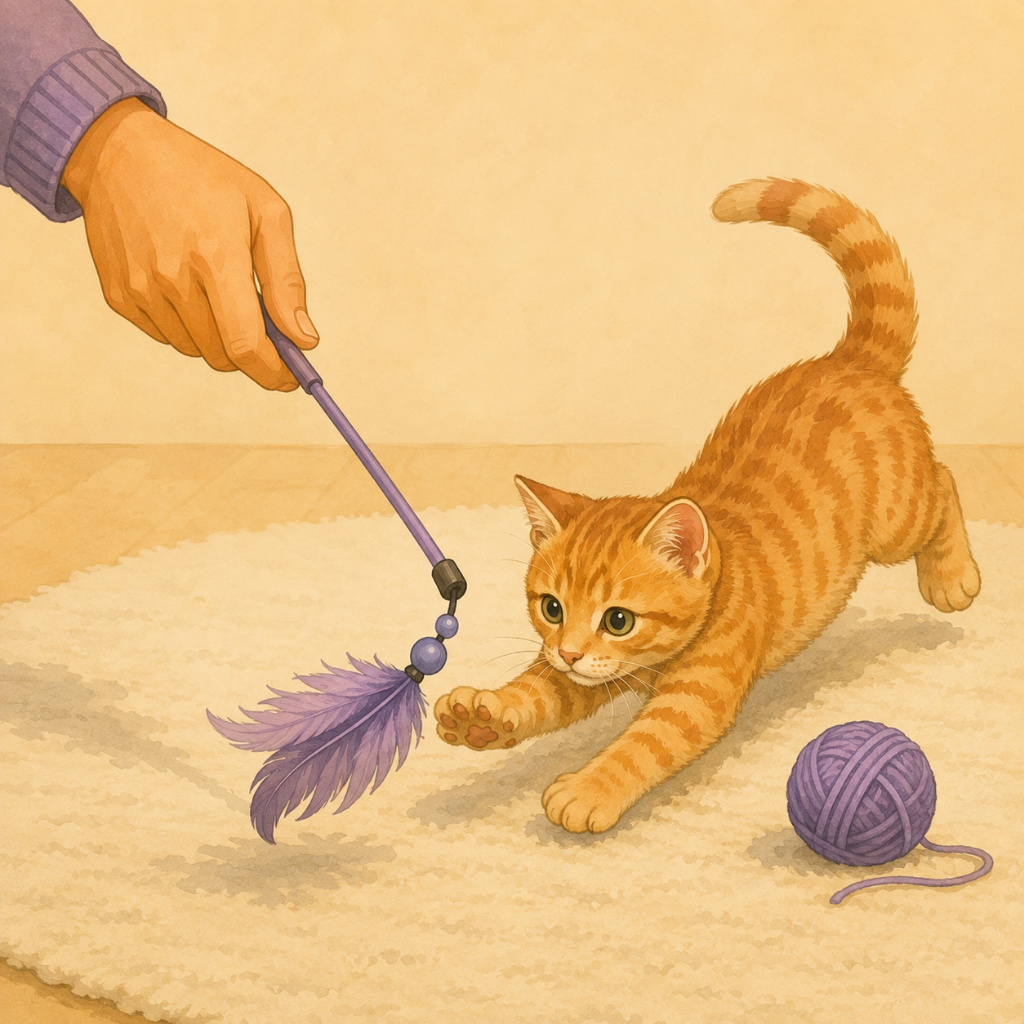
Illustration of an orange tabby kitten crouched to pounce on a lavender ball of yarn

Stage 04 · Socialize

Kittens are prepared for life in homes

Fosters prepare kittens for life in homes through daily handling, play, routine, and human interaction.

Socialization during this window is part of the medical and behavioral outcome, not an optional extra.

Illustration of a calico kitten resting beside a clipboard, vaccine vial, and syringe

Stage 05 · Prepare

Medical progression and spay/neuter

Kittens progress through medical care and spay/neuter while the program prepares for their transfer.

Kittens stay in the program until they are appropriately aged, socialized, and ready for the next stage.

What the model requires is affordable veterinary infrastructure — rescue-priced sterilization, affordable full-service care, and a referral path for cases beyond field scope — not a relationship with any one clinic.

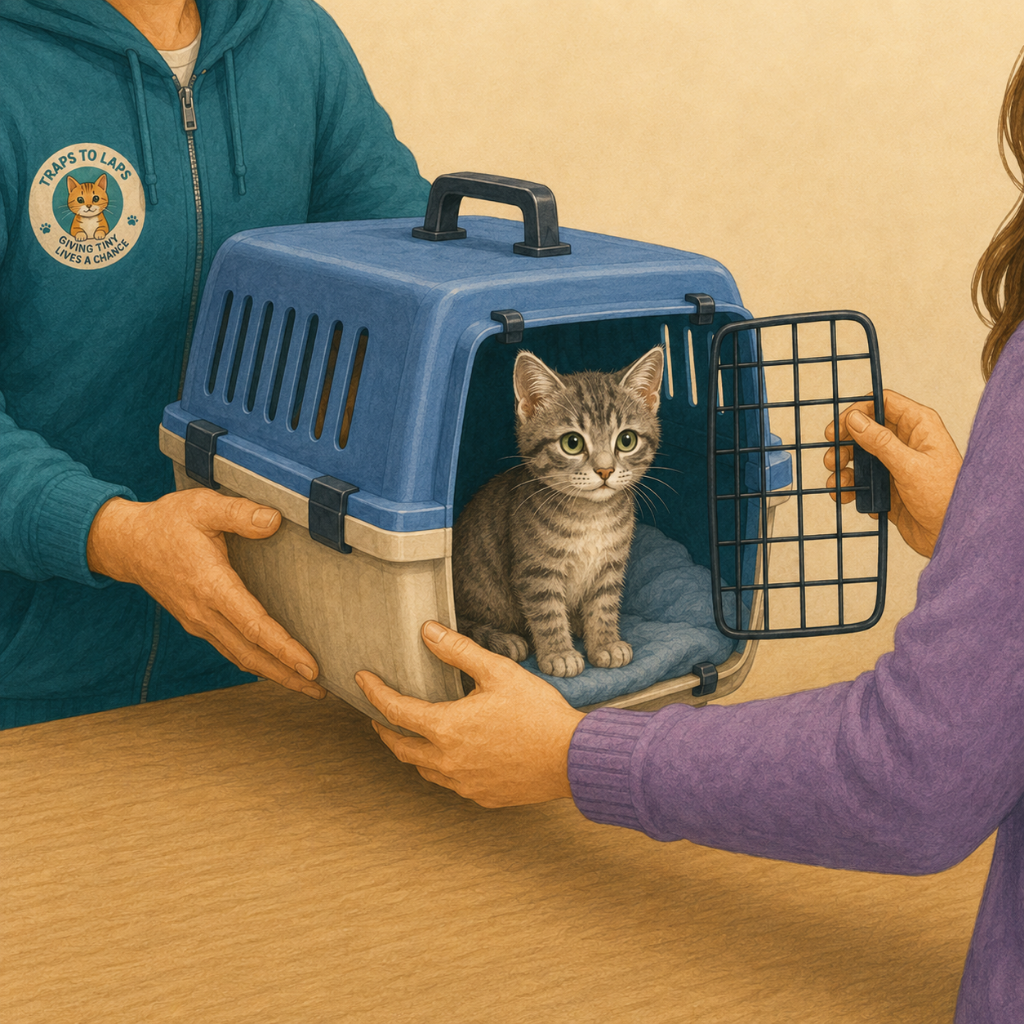
Illustration of a gray tabby kitten sitting calmly in an open teal pet carrier

Stage 06 · Transfer

Adoption partners receive prepared kittens

Adoption partners receive kittens who have already progressed through a structured care pathway, with medical history, socialization notes, and foster contact information.

Adoption partnerships are part of the infrastructure from the beginning rather than something the program figures out once kittens are ready.

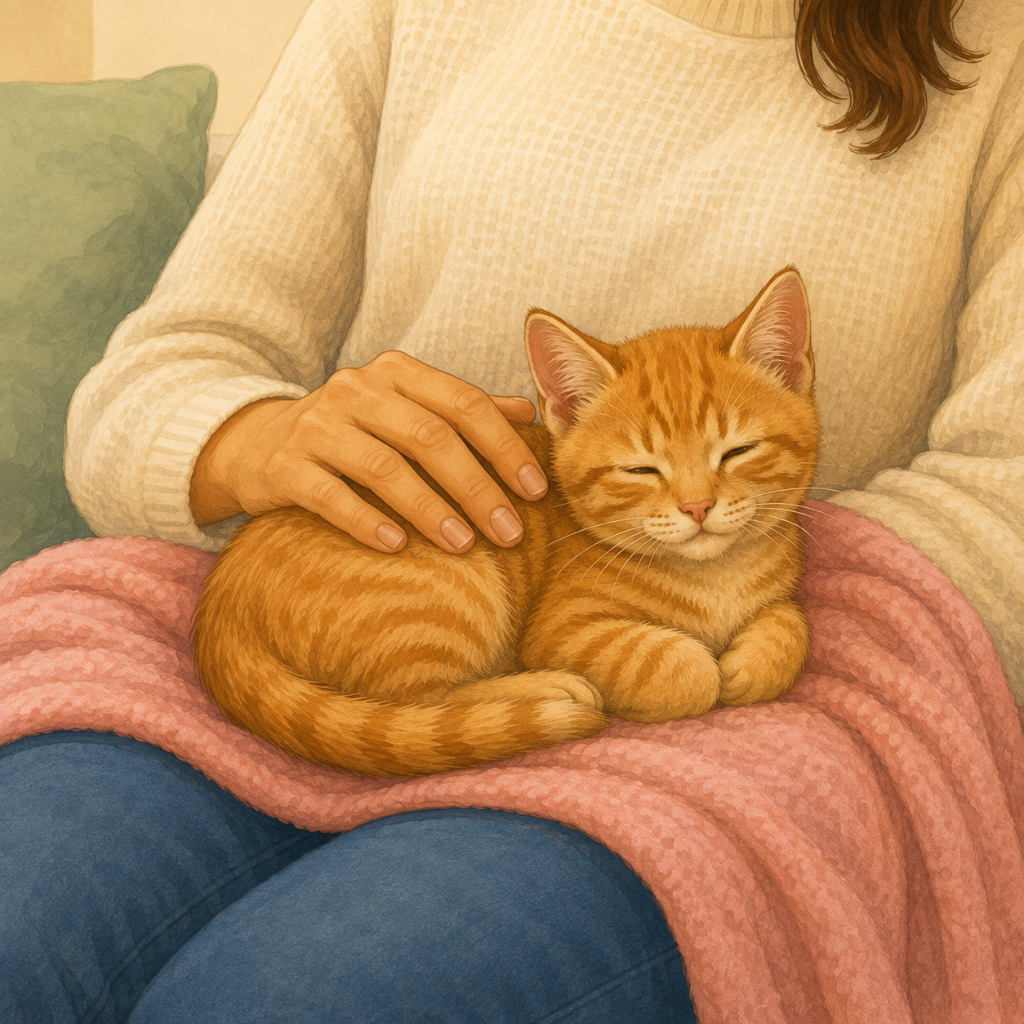
Illustration of an orange tabby kitten asleep in a teal kitten bed at home

Stage 07 · Adopt

Partner organizations place kittens into homes

Partner organizations complete their established adoption process and place kittens into permanent homes.

Traps to Laps is not an adoption service. The final stage belongs to the organizations that do it well already.

Where diversion begins

The question the model changes

Instead of asking

“Who can take these kittens?”

The model asks

“What support would this person need to safely care for these kittens until they're ready for adoption?”

When the answer is workable, the kittens receive a structured path to adoption without occupying shelter space or requiring an established rescue foster home during the weeks when they are growing.

Honest limits

Not every situation fits this pathway.

Assessment matters because the model is not a universal answer. Some kittens need immediate medical intervention. Some environments are not safe. Some finders cannot take on daily care. Some cats belong in a TNR or community cat pathway instead.

  • Medical urgency that requires immediate veterinary intervention
  • Environments that are not safe for kittens to remain in
  • Finders who are unable to provide daily care
  • Cats better served by TNR and community cat programs

A clear assessment step is what keeps diversion responsible rather than a way of shifting risk onto the community.

The people who make it work

Roles the model depends on

Field Tech

Assesses kittens, runs protocol-based care in the field, coaches fosters, and keeps records current. Selection is competency-based rather than credential-based — the current team includes people from trapping, fostering, and veterinary technology backgrounds. Training is apprenticeship: a new candidate is paired with an experienced Field Tech for joint home visits covering processes, protocols, paperwork, foster interaction, and field practice, and joint visits continue until the mentor believes they're ready to work independently. There is no formal written certification, credential requirement, or fixed maximum caseload. The work asks for judgment, compassion, interpersonal skill, willingness to learn, and situational awareness as much as medical knowledge.

Medical Lead

Supports Field Techs with higher-level medical decisions and determines when veterinary escalation is appropriate, working from knowledge, research, and experience. Establishing a competent Medical Lead early is one of the program's strongest recommendations for a new community.

Medical Foster

A specialized foster placement. When kittens need more dedicated or advanced care than their current foster can reasonably provide, they may transfer temporarily to a Medical Foster. Once the issue resolves they may return to the original foster, or stay through sterilization and transfer to an adoption partner. It's how the program answers higher-acuity cases without giving up shelter diversion.

Program Director & administration

Coordination, partner relationships, records ownership, and delegation. As volume grows, this work needs to be shared — roles like Foster Coordinator and Field Tech Coordinator exist because a field model can still stall when everything routes through one person.

Safety comes first. If a Field Tech or team member is uncomfortable with a situation for any reason, the process stops until a safer plan can be made.

Operational infrastructure

Shared information is part of the model

Traps to Laps began with a spreadsheet on the director's laptop. Moving to a shared, accessible platform is one of the biggest reasons the program was able to scale — Field Techs now handle and upload much of their own paperwork instead of routing every update through the Program Director.

Which software a community uses is a local decision. Having a shared system that the appropriate team members can read and write from the beginning is not optional.

The Assessment Form

Captures the picture of a kitten at a point in time: age, weight, condition, behavior and socialization, symptoms, parasites, vaccination status, and other concerns.

The Medical Log

Added because ongoing medical information was overwhelming the assessment form. It tracks active medical issues over time, shares information among Field Techs, the Medical Lead, and the foster, documents medication and treatment instructions for fosters, and gives a veterinarian relevant history when a kitten is seen in clinic. Separating point-in-time assessment from ongoing tracking is something the program learned by running out of room on one form.

Each community must determine the appropriate nonprofit, insurance, liability, volunteer, and legal structure for its local program before operation. Additional Traps to Laps guidance in that area is still under development.

Why structure matters

Traps to Laps does not create unlimited shelter space. It creates another path.

By distributing different parts of kitten care across community fosters, Field Techs, veterinary resources, TNR programs, and adoption organizations, communities can help kittens who otherwise would have competed for the same limited shelter and rescue capacity.

The structure — assessment criteria, standardized protocols, scheduled field support, foster expectations, and pre-arranged adoption partnerships — is what allows the pathway to work repeatedly rather than once.

It started in one community.

We want other communities to build it, adapt it, and make it their own.